Glossy Adjectives, Thin Evidence: A UK Shopper's CBD Label Phrasebook

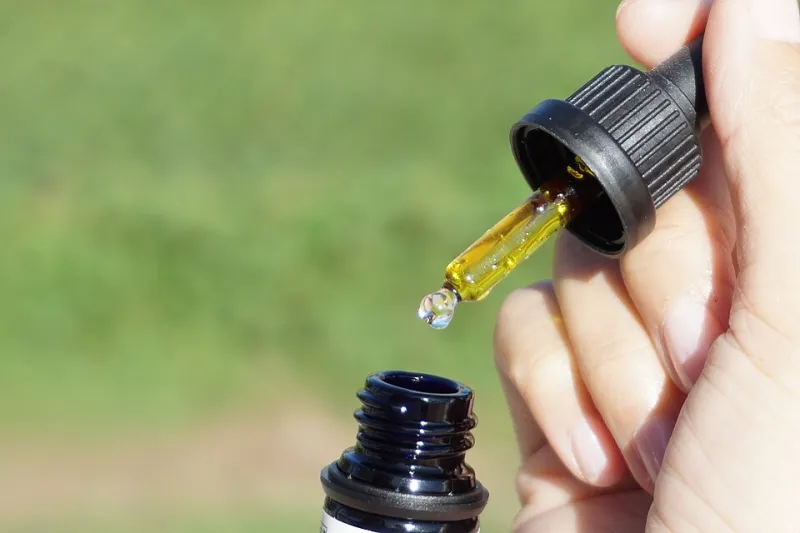
Photo: Kgbo, CC BY-SA 4.0, via Wikimedia Commons
Walk down any UK high street with a CBD shop on it, or scroll half a page of results online, and you'll meet the same handful of adjectives. Premium. Pharmaceutical-grade. Award-winning. Doctor-formulated. Gold standard. They're printed in a serif font, usually next to a leaf, and they're doing an enormous amount of persuasive work for words that carry very little legal weight.
None of that makes the product bad. Plenty of excellent oils come in bottles covered in fluff, and plenty of plain ones are overpriced. But if you're spending £35, £60 or £90 on a small amber bottle, it's worth knowing which phrases you can check and which you simply have to take on trust.
The uncomfortable truth about adjectives
In UK consumer law, marketing claims have to be truthful and substantiable — that's the baseline. What they don't have to be is defined. There is no official body that certifies a CBD oil as "premium". No regulator hands out a "pharmaceutical-grade" badge to a food supplement. Those words are the brand's own opinion of itself, dressed up as a category.
That's not a scandal. It's just how marketing works. The trick for shoppers is to notice when an adjective has quietly replaced a fact.
Words that actually earn their place
Some label language is genuinely load-bearing. These are the bits worth squinting at:
Milligrams, and what they refer to. "1000mg" on the front is meaningless until you know whether it's per bottle, per 10ml, or per serving. A 30ml bottle at 1000mg gives you roughly 33mg per ml; a 10ml bottle at the same figure gives you 100mg per ml. Same number, wildly different bottle.
A batch number and a route to the lab report. A batch code you can match to a certificate of analysis (CoA) is the single most useful thing on any CBD packaging. If a report exists but there's no way to tie it to the bottle in your hand, it proves very little.
Novel food status. CBD extracts sit in the novel food regime in the UK, which means the product should be linked to an application on the Food Standards Agency's novel foods register. Checking that register takes a minute and tells you more than any slogan.
A named lab. "Third-party tested" is a start. "Tested by [named laboratory], report linked by batch" is a claim you can verify.
Full spectrum, broad spectrum, isolate. These describe what's in the bottle, not how strong it is. Useful, but descriptive rather than reassuring.
Words that mostly decorate
Now the other column. None of these are lies by default — they're just not evidence:
- Premium / luxury / gold standard. An opinion.
- Pharmaceutical-grade. Suggests a manufacturing standard without naming one. Ask which standard, and check whether the answer is a real specification or a vibe.
- Award-winning. Which award? Which year? Which category, and who judged it? Some CBD awards are genuinely competitive; others are essentially an entry fee and a logo licence.
- Doctor-formulated. Whose doctor, in what capacity, and are they named? A formulator's credentials can be checked; an anonymous stethoscope emoji can't.
- Pure. Pure what, exactly? Water is pure. So is arsenic.
- Clinical strength. There is no clinical dose for a food supplement. This phrase is borrowed authority.
- Organic. Only meaningful with a certification you can look up — otherwise it's a word with a leaf next to it.
Where UK rules actually bite in 2026
Two rulebooks matter more than any of the above.
First, advertising. The UK advertising codes don't allow medicinal claims for CBD products without a medicines licence. That means no "treats anxiety", no "relieves chronic pain", no "cures insomnia" — and no implying it either, which is why brands write coy things like "for those quieter evenings". If a label or product page leans hard on a medical condition, that's a signal the seller is either careless or hoping you won't notice.
Second, novel foods. The FSA's register is the place to look. You want to see the brand or product linked to an application, and ideally to an authorised status rather than a hopeful "pending". The picture has shifted a lot since the early days of the register, and it's still moving, so treat any list you read as worth re-checking rather than memorising.
Neither rulebook stops a brand calling itself premium. That's rather the point.
Three calm questions before checkout
You don't need to become a regulatory analyst. Ask three things, in this order:
- How much CBD is in one drop or one serving, and where's the batch report for this specific bottle? If the answer is a number and a link, good. If it's a paragraph about their special process, that's your answer too.
- Which register or certification can I check this claim against — and does your name appear there? Novel food register, organic certifier, named laboratory, named award body. Vague nouns don't count.
- If I removed every adjective from this label, what would be left that I can verify? A strength, a volume, an ingredient list, a batch code, a date. If the answer is "not much", the price is probably paying for the font.
The ninety-second version
Before you buy, ignore the top third of the bottle. Read the middle: milligrams, volume, ingredients, batch. Then follow one link to a lab report and one link to the novel foods register. That's it. You'll still be choosing on price and format and whether you like the dropper — but you'll be choosing on things that exist.
Here at CBD First Online, we're not in the business of telling you every expensive oil is a con. Some are genuinely lovely. We'd just rather you paid for the oil than the adjectives.