The Label Says 1000mg — Here’s How to Check If Your CBD Actually Delivers

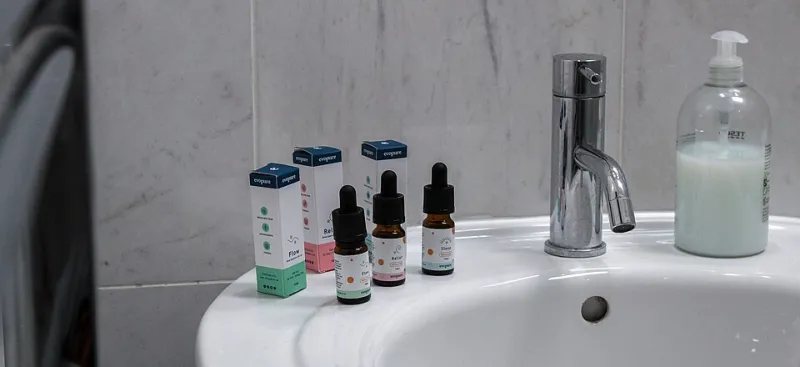
Photo: Patrickroque01, CC BY-SA 4.0, via Wikimedia Commons
Walk into any UK CBD shop — online or on the high street — and you will see bottles shouting 500mg, 1000mg, even 3000mg. It feels reassuringly precise. But in 2026, the gap between the number on the front and what is actually in the dropper is still one of the biggest frustrations for British shoppers. The label is a starting point, not a guarantee.
Why the front of the bottle is marketing, not medicine
CBD labels in the UK are not governed by a single, tidy rulebook that tells brands exactly how to describe strength. Novel food rules, general consumer protection law and the FSA's register all play a part, but none of them turns the front label into a laboratory report. A bottle can say 1000mg and mean 1000mg of hemp extract, 1000mg of total cannabinoids or 1000mg of CBD. Those are three very different claims.
That is why a bottle labelled 1000mg can contain far less CBD than a shopper expects. If the small print says hemp extract, the CBD portion might be only a fraction of the total. If it says full-spectrum extract, the milligram figure may include other cannabinoids such as CBG, CBC and trace THC. None of that is automatically dishonest, but it is unhelpful if you are trying to compare two products on a shelf or a website.
At CBD First Online, our rule is simple: ignore the front-of-bottle theatre until you have found the CBD per ml figure and the batch certificate. Everything else is decoration.
What the FSA Novel Foods register can and cannot tell you
The FSA Novel Foods register is useful, but it is widely misunderstood. It lists CBD products that have a credible novel food application behind them. It is not a quality mark, it is not a taste test and it is not a guarantee that every batch has been checked by the regulator. A product on the register can still have a confusing label. A product missing from the register deserves extra caution.
As of November 2026, the register remains a sensible first filter for UK shoppers. Search the brand and product name, check that the entry matches what you are buying, and be wary of vague claims that a product is 'FSA approved'. The FSA does not approve CBD products in the way that phrase suggests. It assesses applications and maintains the register.
The batch certificate: your best defence
A certificate of analysis, usually called a COA, is the document that tells you what was actually tested in a specific batch. It should include the batch number, the date of testing, the name of the laboratory and a cannabinoid profile. For a UK shopper, the important numbers are total CBD, total THC and, ideally, contaminants such as solvents, pesticides, heavy metals and microbials.
Do not accept a generic certificate that could belong to any bottle. Match the batch number on the certificate to the batch number on the packaging or the website listing. Check that the lab is independent and, where possible, accredited to ISO 17025. A certificate that only shows a colourful graph and a smiley face is not much use.
If the COA shows CBD content that is significantly lower than the front label suggests, walk away. If it shows THC above the 1mg per container limit used for UK CBD extracts, that is a red flag. If it shows no batch number at all, ask why.
Doing the milligram maths
Strength is easiest to compare when you convert it to milligrams of CBD per millilitre. A 10ml bottle labelled 1000mg CBD is 100mg per ml. A 30ml bottle labelled 1000mg CBD is about 33mg per ml. Same headline number, very different concentration.
Then look at the serving size. If the dropper holds 0.5ml, a 100mg per ml oil gives you 50mg of CBD per dropper. If another bottle is 50mg per ml but the suggested serving is 1ml, the actual serving is the same. Brands know that shoppers compare the big number, so they sometimes make the serving size do the quiet work.
THC: the number that matters for UK compliance
THC is the cannabinoid that gets the most regulatory attention in the UK. For CBD extracts, the working limit is generally 1mg of THC per container. That is a very small amount, and a proper COA should show it clearly. If a brand avoids the THC question or says only that the product is 'THC free' without showing a test, treat that as marketing rather than evidence.
Full-spectrum oils can contain trace THC, and that is not automatically a problem if it is within the limit and clearly declared. Isolate products should be much closer to zero. The point is not to panic about trace amounts; it is to buy from brands that can prove what is in the bottle.
Questions to ask before you click buy
Before you pay for any CBD online, ask the retailer four things. Can you see the batch COA? Does it match the product you are buying? What is the CBD content per ml, not just per bottle? And what is the THC content per container? A good retailer will answer without drama. A bad one will send you a PDF from 2023 and hope you do not notice.
Labels are getting better in 2026, but they are still not a substitute for a bit of detective work. The best UK CBD buyers are not the ones who spend the most. They are the ones who read the small print, check the batch and do the maths before they add anything to their basket.