The Five-Pound Bottle and the Missing Batch Code: A Car-Boot CBD Reality Check
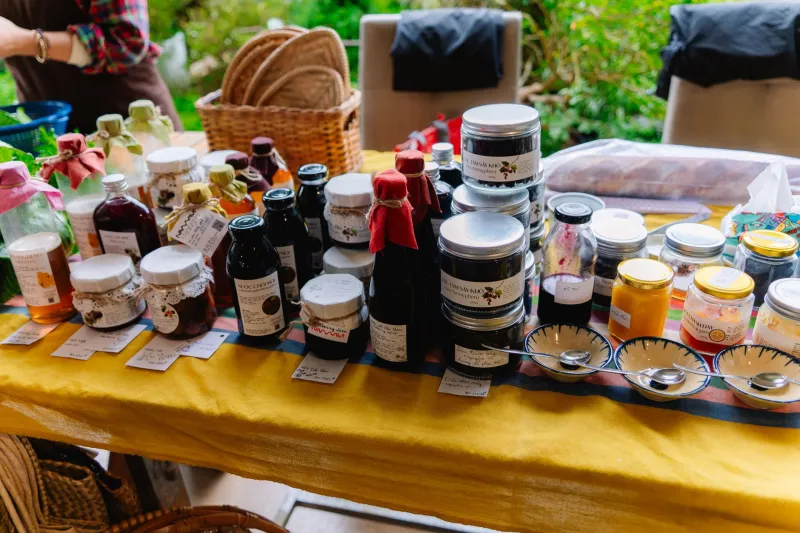
Sunday morning, a field somewhere in the Home Counties, and a stallholder is doing a brisk trade in CBD oil from a cardboard box. The sign says ‘£5 — helps everything’. It is, I’ll admit, a brilliant bit of theatre. But a bottle of CBD from a car boot is not the same as a chipped mug or a box of mismatched cutlery. You are putting it in your body, and the person selling it may be gone by lunchtime.
At CBD First Online, we are not against a bargain. We are against a bargain that comes with no label, no batch code and no comeback. So here is the calm version of the car-boot CBD conversation: what to inspect, what to ignore, and when to walk away with your fiver still in your pocket.
The fiver that doesn’t add up
Let’s do the boring maths first. CBD extract is not a cheap ingredient, and a plausible budget bottle in the UK — say 10ml of 500mg — tends to sit somewhere around £15 to £30 depending on the brand, format and testing. A £5 bottle can exist, but it is usually a small sample, a weak product, or a bottle with a question mark where the lab report should be.
If the label claims 1,000mg for a fiver, the numbers are not on your side. You are not getting a secret wholesale deal; you are getting an unknown liquid with a nice story. That does not automatically make it dangerous. It does make it unverifiable, and unverifiable is the whole problem.
Inspect the bottle, not the banter
A friendly seller is not evidence of a good product. Anyone can be charming for ninety seconds. What you want is information you can check after you’ve walked away.
Start with the seal. If it is broken, missing or looks like it has been peeled back and pressed down again, put it down. An opened CBD bottle has an unknown history: unknown storage, unknown dilution, unknown contents. At a car boot, ‘it’s fine, mate’ is not a chain of custody.
Next, look for the batch code and best-before date. These are not decorative. A batch code links the bottle to a production run and, in a proper operation, to lab testing and recall records. No batch code means no traceability. If the packaging is plain, smudged or suspiciously vague about who made it, that is your answer.
Then read the label properly. You want the amount of CBD stated clearly — per ml and per bottle — plus an ingredients list and a UK business name and address. ‘Hemp extract’ on its own tells you almost nothing. ‘Full spectrum’ is a claim, not a lab result. And if the seller cannot tell you what is in it without reading the box for the first time, walk on.
Claims that should make you walk
CBD is not a medicine in the UK, and sellers should not claim it treats arthritis, anxiety, epilepsy, cancer or anything else. A market stall making those claims is either badly misinformed or hoping you are. Either way, it is not a good sign.
Other warning lights:
- ‘Lab tested’ with no batch number and no report you can open.
- ‘No THC’ shouted loudly, but no ingredient list or test result.
- ‘Doctor recommended’ or ‘clinically proven’ on a handwritten card.
- ‘High strength’ without any milligram figures.
- ‘Last one, mate’ pressure when there is clearly a box of forty behind the table.
- Cash only, no receipt, no brand name, no way to contact anyone afterwards.
None of these prove the bottle is bad. They simply mean you cannot check. When it comes to something you swallow, ‘cannot check’ is enough.
Second-hand listings are a different gamble
Facebook Marketplace and Gumtree add another layer. A private seller may be genuine, but you have far fewer protections than you would with a retailer. ‘Bought too many’ and ‘unwanted gift’ are common listings, and sometimes they are true. But an opened bottle is still an opened bottle. You do not know where it has been kept, whether it has been topped up, or whether the label ever matched the contents.
If you are looking at a second-hand listing, at least ask for a photo of the batch code, the seal and the back label. If the seller goes quiet, that is useful information. If they send a blurry picture of a bottle with no batch code, that is also useful information. Neither is a reason to hand over money.
Why the batch code is the quiet hero
A batch code is the difference between a product and a mystery. It lets a reputable seller trace a bottle back to a production run. If there is a quality issue or a recall, the batch code is how you find out whether your bottle is affected. A car-boot bottle with no batch code is anonymous. When something goes wrong, you will never know.
The same goes for the seal. An intact seal is not a guarantee of quality, but a broken one removes the last bit of certainty. At a Sunday market, certainty is already in short supply.
The walk-away checklist for 2026
Before you part with cash, ask yourself:
- Is the seal intact and obviously untouched?
- Is there a batch code and a clear best-before date?
- Does the label state CBD in milligrams per ml and per bottle?
- Is there an ingredients list, not just ‘hemp extract’?
- Is there a brand name and a UK contact address?
- Can the seller show a lab report that matches the batch code?
- Is the price plausible for the amount of CBD claimed?
- Is the seller avoiding medical claims and pressure tactics?
- Would you be able to return it or complain if something went wrong?
If you answer ‘no’ to the first two, stop. If you answer ‘no’ to most of them, keep walking. The tea van is right there.
If you are still tempted
Treat a car-boot CBD bottle as a novelty, not a supplement. Do not use it in place of prescribed medicine, do not give it to children, and do not assume it is safe just because it came from a field rather than a website. Keep it away from anyone who is pregnant, breastfeeding or on regular medication without proper advice.
Honestly, though, the better move is to spend £20 on a known UK brand with a batch code, a clear label and a returns policy. That is not glamorous. It will not come with a bloke in a fleece telling you it ‘sorts everything’. But it will give you something a car boot rarely can: a paper trail.
The bottom line
Car boot sales are brilliant for garden tools, paperback novels and the occasional chair that only needs one screw. They are a poor place to buy CBD. A £5 bottle is rarely a bargain; it is a small gamble with an unknown liquid and no comeback. If the seal is broken and the batch code is missing, the only sensible move is to leave it on the table.