The Appointment Note: Talking CBD With Your GP in Five Calm Minutes

Why this conversation is worth having
CBD is easy to buy and easy to keep quiet about. A bottle on the kitchen shelf can feel like a private matter, somewhere between a supplement and a habit. But your GP's record is only useful if it is reasonably complete. You are not asking for permission to use CBD, and you are not confessing to anything. You are giving a clinician the information they need to do their job safely.
That matters more in 2026 than it did a few years ago. CBD products are widely sold in the UK as food supplements, high-street shops have multiplied, and online ranges are vast. At the same time, CBD is not a licensed medicine for most uses, product strengths vary wildly, and the label may not tell the whole story about what is in the bottle. A calm five-minute conversation is a sensible bit of housekeeping.
The sentence that causes the most trouble
'It's natural, so it can't interact.'
This is probably the most dangerous sentence in the whole CBD category. Natural does not mean neutral. CBD is processed by the same liver enzymes that handle a long list of prescription medicines — particularly the cytochrome P450 family, including CYP3A4 and CYP2C19. That does not mean every combination is risky. It means the question deserves a proper look rather than a shrug.
There is also the product problem. CBD oils and capsules can contain small amounts of THC, depending on the product and the batch, and the actual cannabinoid content may not match the label perfectly. Add alcohol, other supplements, grapefruit juice, or a new prescription and the picture gets more complicated. Your GP does not need a lecture on cannabinoids. They need enough detail to spot a possible interaction or flag a monitoring issue.
What your GP actually needs to know
Keep it concrete. Most appointments are short, so aim for the information that changes a clinical decision:
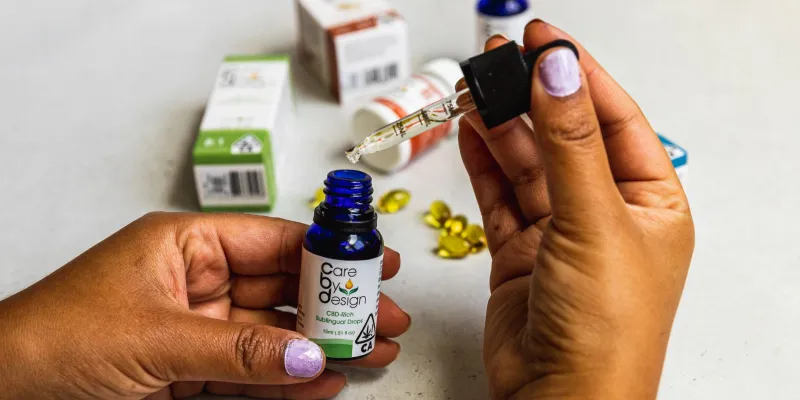
- What you take. The brand or product name, plus the bottle strength if you have it. 'CBD oil, 1000mg bottle' is better than 'some CBD drops'.
- How much CBD you actually take. Milligrams per day is the useful number. If the label says 10mg per drop and you take four drops, say 40mg daily.
- How often, and how. Once at night? Twice a day? Under the tongue, swallowed, vaped, or rubbed on? Route matters.
- Why you are taking it. Sleep, anxiety, joint pain, general wellbeing — be straightforward. 'I'm trying it for sleep and I want to know if it clashes with my tablets' is a perfectly good sentence.
- Everything else in the medicine cupboard. Prescribed medicines, over-the-counter painkillers, inhalers, hormonal contraception, herbal remedies, and any supplements. This is not the moment to leave out the St John's wort.
- Relevant health history. Liver or kidney problems, pregnancy or plans to become pregnant, breastfeeding, and any upcoming operation or dental surgery.
- Side effects so far. Drowsiness, dizziness, digestive trouble, a dry mouth, or nothing at all. All useful.
The drug classes worth flagging
You do not need to memorise pharmacology. But these are the conversations worth starting, especially if you are on long-term treatment:
Blood thinners. Warfarin and direct oral anticoagulants such as apixaban, rivaroxaban, edoxaban, and dabigatran are the obvious ones. CBD may affect bleeding risk or interact with how some medicines are metabolised. If you bruise easily or notice unusual bleeding, say so.
Epilepsy medicines. This is a well-known area of interaction, particularly with clobazam and other medicines processed by CYP enzymes. Never change epilepsy treatment on your own, and do not assume a shop-bought CBD product is the same as a prescribed cannabinoid medicine.
Some antidepressants and antipsychotics. Several are metabolised by CYP enzymes, and CBD may alter levels in theory. That does not mean you must stop either treatment. It means your GP or pharmacist should know what you are taking, particularly if you feel unusually sedated, shaky, or unwell after starting CBD.
Anything with a grapefruit warning. This is a useful shorthand. Medicines that interact with grapefruit often involve CYP3A4, which is also relevant to CBD. It is not a perfect rule, but it is a good prompt to ask the pharmacist.
Narrow therapeutic index medicines. This includes certain immunosuppressants, heart medicines, and lithium. Small changes in blood levels matter more with these, so disclosure is especially worthwhile.
A five-minute script you can borrow
You do not need a speech. Something like this works:
'Can I flag something I take alongside my prescribed medicines? It's CBD oil — this brand, this strength. I usually take about 20mg in the evening for sleep. I'm also on [medicine names]. I wanted to check whether there are any interactions I should be aware of, and whether I need any monitoring. I've been taking it for about six weeks and I haven't noticed any side effects, but I'd rather have it on my record.'
If you are speaking to a pharmacist instead, the same script works. Pharmacists are often the quickest route for interaction checks, and they can look at the actual products in front of them. Bring the bottle, a photo of the label, or the batch details if you have them. A screenshot of the product page is better than a vague memory.
The note to take with you
Write this down or keep it in your phone notes before the appointment:
- Product name, strength, and CBD mg per dose
- Daily total in milligrams
- Route and timing
- Start date and any breaks
- THC content if the label states it
- All prescription medicines, over-the-counter products, and supplements
- Liver, kidney, pregnancy, or breastfeeding considerations
- Upcoming surgery or dental procedure date
- Any side effects or changes you have noticed
If you feel judged
Some people worry about being lectured. In reality, most GPs and pharmacists are more interested in the medicine list than the morals. Lead with safety: 'I'm not asking you to approve it; I want it on my record and I want to check interactions.' That framing tends to land well. If you still feel brushed off, ask the pharmacist for a medicines review, or book a routine appointment rather than trying to squeeze it into a ten-minute problem visit.
When to stop and ask rather than adjust the dose
Do not try to fix a possible interaction by simply taking less CBD and hoping for the best. Seek advice if you notice unusual bleeding or bruising, yellowing of the eyes or skin, dark urine, severe abdominal pain, palpitations, fainting, or a marked change in mood or sleep. Get advice before surgery, during pregnancy or breastfeeding, and before starting or stopping any prescription medicine. If you feel very unwell, contact your GP, call NHS 111, or use emergency services as appropriate.
The five-minute conversation is not about giving CBD a formal seal of approval. It is about making sure the person looking after your health has the full picture — and that you know what to watch for.