Paper Trail, Not Portal: How to Tie a CBD Lab Report to Your Actual Bottle
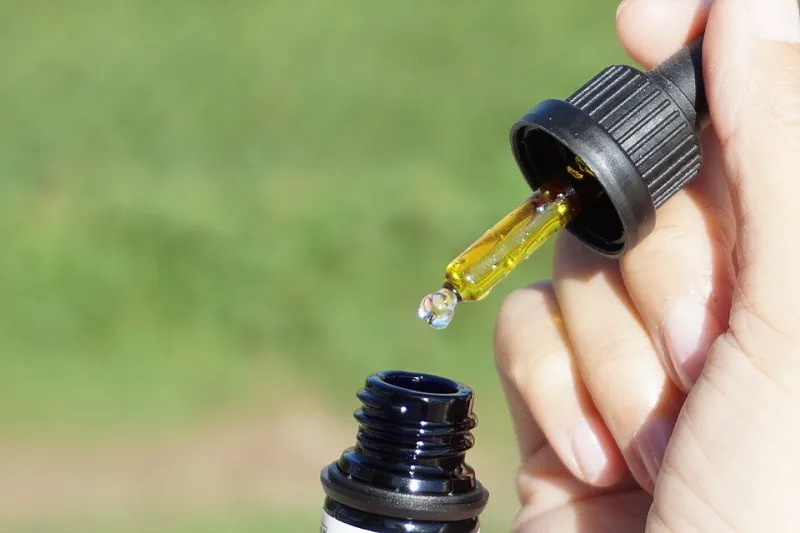
Photo: Elsa Olofsson, CC BY 2.0, via Wikimedia Commons
Most UK CBD shelves now carry a little square of black-and-white optimism: the QR code that promises a lab report. You scan it on the bus, half a sandwich in your other hand, and the link either dies, opens a brand homepage, or coughs up a certificate for a batch that is not the one in your basket. It is a small annoyance with a real consequence: without a proper paper trail, you cannot tell whether the bottle in your hand has anything to do with the test results you are reading.
This is not about demanding a forensic dossier with every dropper. It is about knowing what a certificate of analysis can and cannot tell you, and how to tie it to the exact bottle you own. Here at CBD First Online, we would rather you spend five calm minutes checking than five weeks wondering.
Start With the Bottle, Not the Website
A lab report is only useful if it belongs to your batch. So begin with the physical bottle. Look for a batch number, lot number, or a short code printed on the label, the base, or the neck. It may sit next to a best-before date. Photograph it before you peel anything off or recycle the box.
Then check the packaging for a QR code or a web address. Scan it, but do not treat the destination as proof of anything yet. A QR code is a doorway, not a certificate. The question is whether the page behind it shows a document that matches your batch, your product name, and a sensible test date.
If the code opens a general product page with no batch selector, that is not a lab report. It is marketing with a test result somewhere in the background. Useful, perhaps, but not enough on its own.
What a Useful Lab Report Actually Contains
A certificate of analysis, usually shortened to COA, should be more than a PDF with a green tick. For CBD products, a useful report will normally show:
- the product name and the batch or lot number
- the date the sample was received or tested
- the name of the laboratory that did the testing
- a cannabinoid profile, including CBD and THC where relevant
- contaminant testing, such as heavy metals, pesticides, residual solvents, and microbiological checks
- the method used and the limits applied
- results with units, not just pass or fail
The exact package varies by lab and product type. A CBD oil is not tested in exactly the same way as a balm. But the principle holds: the report should let you see what was tested, on which sample, and with what result. If the document only says 1000mg CBD and nothing else, you have a label in PDF form, not a full COA.
How to Ask for a Certificate Without Getting Fobbed Off
Dead links happen. Websites get rebuilt, files get moved, and small brands sometimes rely on a QR code that was set up by someone who has since left. The polite response is not to shrug; it is to ask.
Email the brand or use the contact form. Give them the batch number and product name, and ask for the certificate for that exact batch. Keep it short. Something like:
Hello, I have a bottle of [product] with batch [number]. Could you send me the certificate of analysis for that batch, including the cannabinoid profile and contaminant results? A PDF is fine. Thanks.
That wording does two things. It shows you are not asking for a generic brochure, and it gives the brand a clear, easy task. A well-run CBD company should be able to point you to the right document or explain why it cannot. If the only reply is a link to the same dead QR page, ask again for the batch-specific PDF.
Matching the Batch Number: The Five-Second Handshake
When the report arrives, do not read the whole thing in the kitchen. First, check the handshake. Does the batch number on the certificate match the batch number on your bottle? Does the product name match closely enough to make sense? Is the test date plausible for the bottle in your hand, rather than three years old?
A mismatch is not automatically a scandal. Brands sometimes use a master batch, a different internal code, or a repackaged label. But they should be able to explain the link. If the certificate is for batch A123 and your bottle says B456, and nobody can tell you why, treat that as a gap in the paper trail.
Also check that the report is for the same format. A certificate for CBD capsules does not tell you much about a CBD oil, even if the milligram strength looks similar. Testing is product-specific for a reason.
Red Flags That Should Slow You Down
No single red flag is proof of a bad product, but a cluster of them is a reason to pause before you reorder. Look out for:
- a QR code that opens a homepage, a newsletter sign-up, or a generic blog post
- a certificate with no batch number, or a batch number that changes every time you refresh the page
- the same report used for every product and every strength
- missing pages, especially contaminant results that are mentioned but not shown
- a lab name that cannot be found, or no indication of accreditation for the test in question
- results with no units, no limits, or no clear pass or fail
- a test date that predates the product batch by a long way, with no explanation
- a brand that gets defensive when asked a simple batch question
None of this requires a chemistry degree. You are checking whether the story hangs together. If it does not, you can choose to spend your money somewhere with a tidier filing cabinet.
What to Do If the Report Is Missing
If the link is dead and the brand cannot supply a batch-specific COA, you have a few options. You can keep the bottle and use it according to the label, while accepting that you are buying on trust rather than evidence. You can return it if the retailer allows and the seal is intact. Or you can simply note it and choose a different brand next time.
What you should not do is assume that a broken link means the product is dangerous. It may just mean the website is untidy. But in a market where lab reports are used as a selling point, a brand that cannot produce one for your batch is asking you to ignore the very evidence it advertised.
Keep a Small Paper Trail
You do not need to build a spreadsheet. A screenshot of the product page, the batch number, and the COA PDF in a folder is enough. If you ever need to ask a question, or compare two bottles, you will be glad you did.
In 2026, QR codes are everywhere on UK CBD packaging. They can be genuinely useful. But the code is not the proof. The proof is a certificate that names your batch, comes from a real lab, and shows its working. Scan the square, yes. Then check the paper behind it.