The Spectrum Shuffle: Reading CBD Labels Without Getting Lost in the Jargon
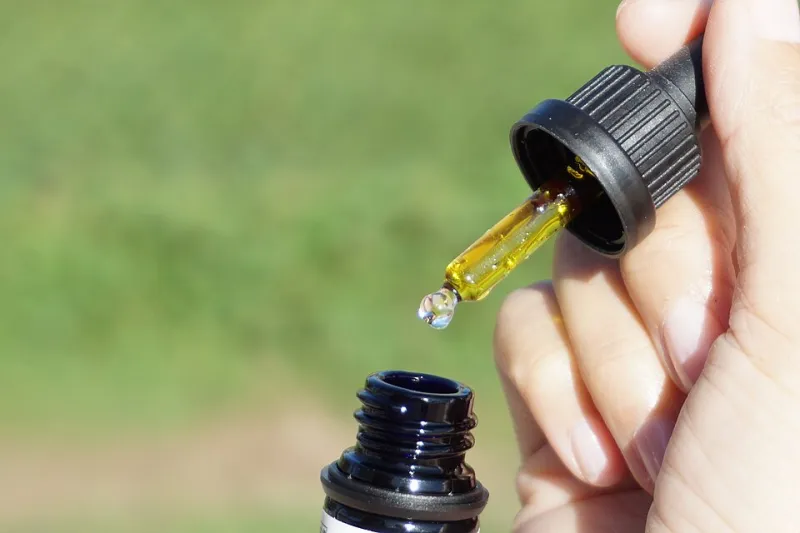
Photo: Elsa Olofsson, CC BY 2.0, via Wikimedia Commons
Why the front label is only a starting point
Walk into a UK health shop or scroll a CBD website in 2026 and you will meet the same three phrases: full spectrum, broad spectrum and isolate. They sound technical. They are useful shorthand. But they are not a quality grade, a dose, or a guarantee that the bottle contains what the label promises. In practice, the words describe a style of extract. The batch-specific lab report describes what is actually inside. That distinction matters if you are paying a premium for a particular spectrum.
Full spectrum: more than CBD, but how much more?
Full spectrum usually means an extract that retains a range of cannabinoids found in the hemp plant, often including trace amounts of THC alongside CBG, CBC and others, plus terpenes. The idea is that you get the plant's natural mix rather than a single molecule. That can be appealing. But full spectrum is not a promise of a rich cannabinoid profile. One bottle might have meaningful minor cannabinoids; another might be mostly CBD with a sprinkle of everything else. In the UK, products also need to comply with novel food rules and controlled drug legislation, so any THC content should be declared and within legal limits. If a seller cannot show you a cannabinoid profile for the batch you are buying, full spectrum is just a phrase on the front.
Broad spectrum: the middle ground with a looser definition
Broad spectrum generally means an extract with multiple cannabinoids but with THC removed or reduced to below a stated detection limit. That sounds precise. It often is not. Some suppliers use broad spectrum to mean full spectrum with THC stripped out; others use it for a blend of isolates with a few added minor cannabinoids. There is no single industry-wide recipe. If avoiding THC matters to you, do not assume broad spectrum is automatically THC-free. Ask for the lab report and look for the THC result, the limit of detection and the date of testing. The same goes for anyone who has been told broad spectrum is gentler or more effective. Those are marketing claims, not label facts.
Isolate: purity is the point, but not a personality
Isolate is the simplest idea: CBD on its own, typically with no other cannabinoids or terpenes. It is popular with people who want a predictable dose and no THC. A high purity figure, such as 99%, sounds impressive, but it refers to the CBD content of the extract, not the quality of the finished oil. You still need to know the total milligrams in the bottle, the carrier oil, and whether the batch has been tested for contaminants. Isolate is not boring or inferior by default. It is just a different tool. If you want a clean, repeatable dose and are not chasing the minor cannabinoid story, it can make sense. If you are paying extra for isolate, check that the premium buys you testing and transparency rather than a prettier label.
The entourage effect: an interesting idea with a loud sales pitch
The entourage effect is the theory that cannabinoids and terpenes work better together than CBD alone. It is a fascinating area of research, but human evidence is still limited, and the term is often stretched well beyond what the science supports. A product can contain tiny amounts of five minor cannabinoids and still be sold as if it were a full orchestra. Dose still matters. A 500mg full-spectrum bottle does not become a 1000mg bottle because the label mentions terpenes. Treat entourage effect claims as a reason to look at the lab report, not a reason to ignore the price per milligram.
The lab report is the label you should read
A batch-specific certificate of analysis, or COA, is the document that tells you what was tested and what was found. Look for the batch number matching the bottle, the lab's name, the test date, cannabinoid results, and contaminant screening. A generic lab-tested badge is not enough. Neither is a report from a different batch. If the COA shows 480mg of CBD in a bottle labelled 500mg, that is useful information. If it shows trace THC, you can decide whether that suits you. If the seller will not share a COA before purchase, ask yourself why. In the UK, a novel food listing or regulatory paperwork can show a product has been through a process, but it does not prove the label on your bottle is accurate. Testing does that.
Smart questions before you pay a premium
Ask what the total CBD is per bottle and per dose, not just the bottle size. Ask which minor cannabinoids are present and at what levels. Ask for the batch-specific COA and check that the batch number matches. Ask what carrier oil is used and whether there are any added flavourings or sweeteners. Ask why the product costs more than a plain oil with the same milligrams. If the answer is better testing, clearer dosing or a formula you actually want, fine. If the answer is a story about the plant, a fancy box or a term like full spectrum with no evidence, keep your money.
The bottom line
Full spectrum, broad spectrum and isolate are useful words, but they are not a ranking. They tell you roughly what kind of extract you are looking at. They do not tell you the dose, the purity, the THC level or the value. British shoppers are increasingly savvy about CBD, and the next step is to treat spectrum language as a starting point. Match the product to what you need, check the batch report, and compare cost per milligram. If the bottle cannot explain itself beyond the front label, it is not worth a premium.