Fifteen Five-Star Reviews and One Nagging Doubt: How to Audit CBD Feedback Before You Buy

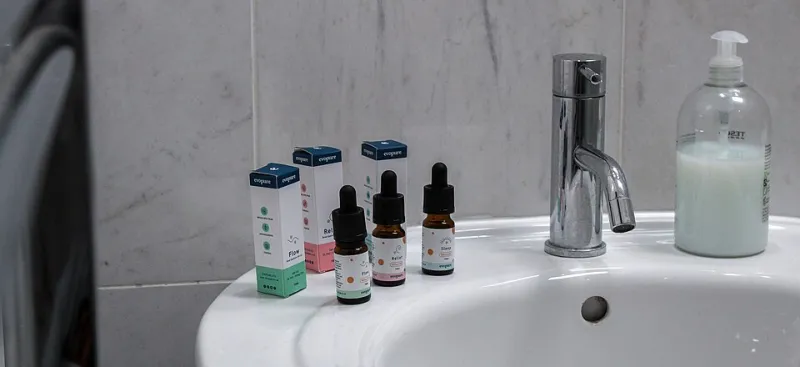
Photo: Mam'Gobozi Design Factory (MDF), CC BY-SA 4.0, via Wikimedia Commons
You have found the bottle. The page says 4.8 out of 5, there are 137 reviews, and the top comment calls it 'life-changing'. Two minutes later you notice that three of those reviews use the phrase 'game changer' and were posted within the same hour. That is the moment the nagging doubt arrives — and it is a useful doubt to have.
Reviews are a genuinely good buying tool. They are just a terrible verdict. Here is how to use them properly without getting starstruck.
A star rating is an average, not evidence
Four point eight out of five from 11 reviews tells you almost nothing. Four point three from 900 reviews tells you quite a lot, especially if the spread is believable — a few one-stars complaining about a leaky dropper, a cluster of threes saying the taste is earthy, a majority of fours and fives.
Look at three things before you read a single word of praise: volume, spread and recency. A shop with 400 reviews dating back to 2021 but nothing in the last eight months is worth a raised eyebrow. So is a product with a perfect score and no reviews below four stars at all. Real products annoy somebody.
Patterns beat individual comments
One enthusiastic review is noise. Five that sound like the same person is a signal. Watch for:
- The same unusual phrase appearing across different names — 'sleep like a baby', 'calm without the fog', 'tastes like the real thing'.
- Reviews that praise delivery and nothing else. 'Arrived next day, well packaged' is a review of a courier, not of cannabidiol.
- Short, punctuation-free bursts with a first name and an initial, posted in batches.
- Enthusiasm with no specifics. Genuine users tend to mention the strength, the bottle size, how many drops they take and how long they have been on it. Vague praise is cheap to write and cheap to buy.
- Five stars for a product the reviewer admits they have not tried yet. It happens more than you would think.
Incentives and the small print
Many UK retailers run 'review for a discount' schemes, prize draws and free-product programmes. None of that is automatically dishonest, but it does change the mood of a review page — people who got something free tend to be kinder, and people chasing a voucher have an incentive to be brief and positive.
Look for a line near the review section saying something like 'some reviews were collected from customers who received a sample' or 'reviews may be incentivised'. If a shop publishes that, good — transparency is a point in its favour. If a shop runs a giveaway and says nothing about it anywhere, that is the doubt doing its job.
Worth knowing: since the Digital Markets, Competition and Consumers Act came into force in 2025, fake and misleading online reviews have been squarely on the wrong side of UK consumer law. The rules exist. Enforcement is patchy. Your scepticism is still the cheapest filter you have.
Test the compliment against the certificate
This is the bit most shoppers skip, and it is the most useful five minutes you will spend.
Say a reviewer writes that a 1000mg bottle 'really hits the spot' and that the effect is noticeable within ten minutes. Fine. Now find the batch number on the product page, pull up the certificate of analysis, and check what the lab actually found. Does the total cannabinoid content match the label? Is there a CBD figure and a separate THC figure? Is the test dated within the last year or two, and does it name a lab you can look up independently?
If the reviews describe an experience the paperwork cannot support, the reviews are the weaker source. Always. A lab report is a measurement; a review is a mood.
It is also worth checking whether the product appears on the FSA's register of novel foods. That is not a quality mark for a specific bottle, but an unlisted brand selling ingestible CBD in the UK has some explaining to do.
Read the three-star reviews first
Two-star and three-star reviews are where the honest detail lives. People who are mildly disappointed write paragraphs. They mention the taste being grassy, the dropper losing its markings, the oil being thinner than expected, the price creeping up, the bottle arriving without a box. Those are the things that will annoy you in week three, and no five-star review will mention them.
Sort by lowest rating, skim the rants, then read the middle. You will come away with a far more accurate picture than the highlight reel at the top.
Check the shop's policies, not just its praise
A review page sits inside a business. Look around it:
- Is there a real trading address and a phone number, or just a contact form and a Gmail address?
- Is there a clear returns policy? Under UK distance-selling rules you normally have 14 days to change your mind, but opened food and supplements are often excluded — a shop that spells out exactly where you stand is more trustworthy than one that hides it.
- Are batch numbers published per product, or do you have to email and ask?
- Do they answer critical reviews? A polite reply to a two-star complaint says more than fifty five-star raves.
A ten-minute audit you can do on any product page
- Note the rating, the number of reviews and the date of the newest one.
- Skim the five-stars for repeated phrasing.
- Read every three-star review in full.
- Search the page for the word 'incentive', 'free' or 'prize'.
- Find the batch number and open the lab report.
- Cross-check the stated milligram strength against the certificate.
- Check the FSA register for the brand.
- Read the returns policy before you add to basket.
Buy one bottle, not three
Reviews narrow the field. They do not make the decision. The last step is a small purchase and a careful first week with it — start low, keep notes, and let your own experience do the final judging. If a shop's reviews were honest, that first bottle will probably behave exactly as described. If it does not, you have lost the price of one bottle rather than a bundle, and you have learned something no review page could have told you.